
Stop Over-Tipping on Free OnlyFans Pages Today
Free OnlyFans pages look like the cheapest way to follow a creator, and that is exactly why they are the easiest place to overspend. A page with no subscription price removes the one moment where you normally decide whether to pay. What replaces it is a stream of small optional payments, and those payments are where budgets quietly fall apart.
This article explains how over-tipping starts, how to spot the drift, and how a simple pause rule plus a visible monthly tip record can interrupt the pattern. Nothing here requires willpower alone. It requires a structure you check once a week.
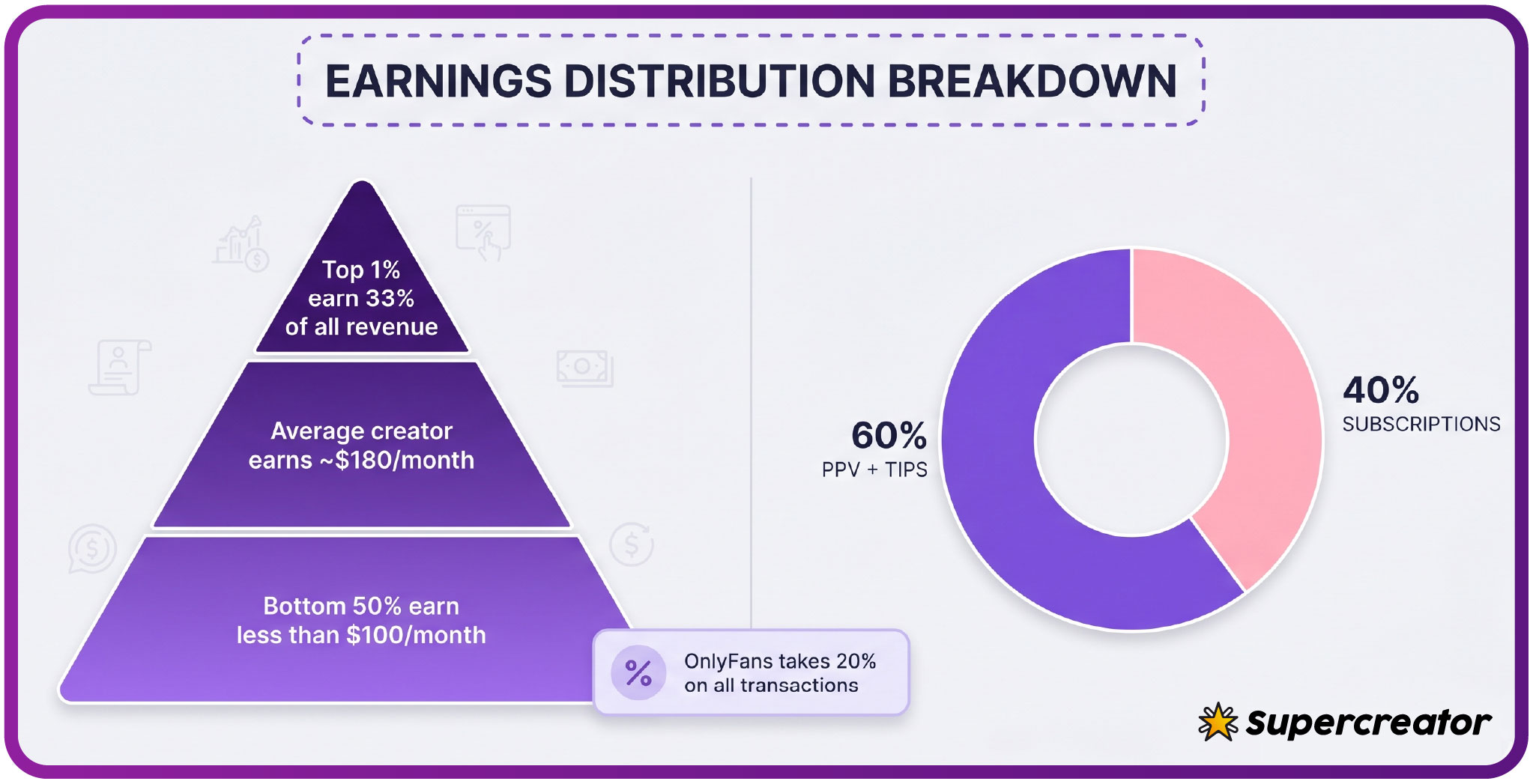
One number matters before anything else: the platform fee is 20% on everything, including subscriptions, tips and pay-per-view messages. The creator keeps 80%. That fee applies whether you send a large tip or a small one, so the habit you are trying to control is not about the platform at all. It is about the number of times you press send.
How Over-Tipping Starts
The usual beginning is a single small tip. It feels minor, so it does not get recorded anywhere. The next one is also minor, and by the third or fourth week the amount has become part of your routine rather than a decision.
What makes this hard to notice is that free pages have no recurring charge to compare against. A paid page at $4.99 to $15 is visible on a statement every month. A tip of the same size, sent five times, is visible only if you look for it.
| Signal | Healthy pattern | Troubling pattern |
| Timing | Tips sent after reading the message and deciding | Tips sent within seconds of a notification arriving |
| Size | Consistent amount you chose in advance | Amounts that rise whenever a new request appears |
| Record | You can state last month’s total | You have no idea what the total was |
| Response | You are fine if the tip goes unacknowledged | You feel you must send again to get a reply |
A useful way to frame the whole topic is a comparison sheet: treat a tip like a purchase you would log, not like a reaction you would forget. That single shift in framing is what most people skip.
Drift Patterns to Watch
Drift is not one large decision. It is a set of small habits that stack over weeks until the total no longer matches what you intended. These are the ones that appear most often.
- Rounding up every tip so the number looks tidy, which adds a small amount each time.
- Sending a tip instead of replying in a message thread, turning conversation into spending.
- Adding a tip to every pay-per-view purchase out of habit rather than intent.
- Matching the size of a tip you saw someone else send.
- Tipping twice in the same session because the first one felt too small.
- Increasing the amount after a quiet week, treating it as a correction.
Each habit on its own is small. Combined over a month, they can push a free page past what a paid page would have cost, without any single moment where you chose that outcome.
Tip: Before sending any tip larger than your usual amount, close the app and wait ten minutes. If you still want to send it after the wait, send the usual amount instead and log the difference. The pause removes the reaction without removing the choice.
The Pause Rule
The pause rule is a fixed delay between the impulse and the payment. It works because most tips are decided in seconds, and a short delay is enough to convert the impulse back into a decision.
Set the threshold once, then follow the same steps every time. The steps matter more than the threshold you pick.
- Decide a usual tip size in advance and write it down.
- When a request appears, check whether the amount is above that usual size.
- If it is, leave the page and set a ten-minute wait.
- After the wait, either send the usual amount or send nothing at all.
- Record the amount you did not send, so the saving is visible.
Tip Logs versus Statements
A bank statement and a tip log answer different questions. The statement tells you what left your account. A tip log tells you why, and how often, which is the part that changes behaviour.
| Source | What it shows | What it hides |
| Bank or card statement | Total amount charged, with dates | Which page, which reason, and whether the tip was planned |
| Personal tip log | Page, amount, trigger and whether it was planned | Nothing important, as long as you update it weekly |
A running total maintained in a notes app is enough. The point is not accounting accuracy; the point is that you can see the number before you decide to add to it. Ranking services such as BestOnlyFans compare public profile prices, promotions, activity and media counts, which helps you decide where a subscription is worth it, but a tip log is what tells you what you actually spend on top of that.
Triggers That Drive Tips
Tips are rarely random. They follow cues, and most cues repeat on a predictable schedule. Naming them makes them easier to interrupt. A practical starting point is best onlyfans review roundup, which lists pages by the signals above.
- A limited-time promotion that implies the moment will pass.
- A direct message that asks a question you want answered.
- A milestone post that invites supporters to mark the occasion.
- A quiet evening with no other plans and the app already open.
- A comparison with someone else’s visible support.
- A wish to keep access to pay-per-view messages you have already bought.
Once you can name the cue, the pause rule has something to attach to. You are no longer resisting an undefined urge; you are responding to a specific prompt with a fixed procedure.
Replacing the Reflex
A pause only works if the impulse has somewhere else to go. Substituting a free action for the tip keeps the routine intact without the cost.
Free pages earn through pay-per-view messages and tips rather than a subscription, so the requests will keep arriving. The goal is not to stop engaging. It is to make the default response something that does not spend money.
- Reply in the message thread instead of tipping.
- Save the post and come back to it the next day.
- Write the amount you would have sent into your log as a skipped tip.
- Wait for the next scheduled check-in rather than acting immediately.
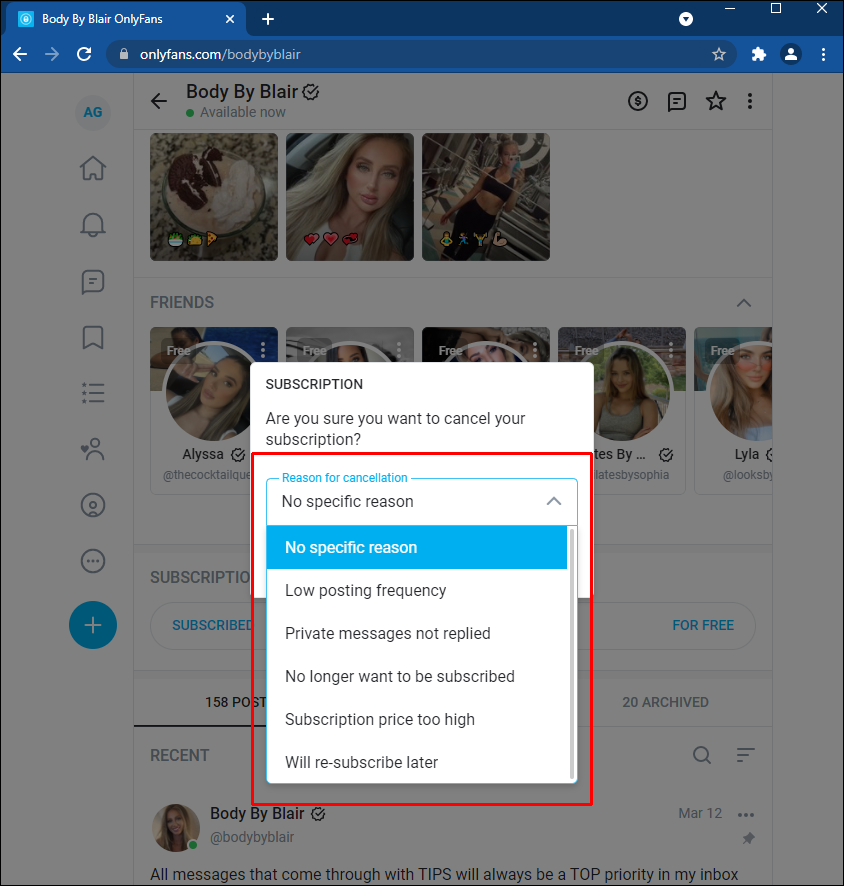
If you also hold a paid subscription, remember that paid pages typically run $4.99 to $15, with $5 to $10 being common, and the range across the platform runs from $4.99 at the minimum to $49.99 at the maximum. There is no base price below $4.99; only promotional first months may dip under it. When a creator raises the subscription price, auto-renew stops, and existing access lasts until the current paid period ends.
Reviewing After a Heavy Week
Heavy weeks happen. The recovery is mechanical: read the log, add the total, and set the next week’s allowance below the average you just recorded.
Do not attempt to repay a heavy week by skipping everything. A tight, unrealistic limit usually breaks within days and produces a larger total than the original overspend.
- Setting the next allowance at zero instead of a reduced figure.
- Deleting the log because the total was uncomfortable.
- Ignoring pay-per-view messages when counting the week.
- Treating one heavy week as proof that the whole approach failed.
- Changing the usual tip size mid-week without writing the new figure down.
A practical comparison aid at this stage is a review service that lists public profile details side by side. One such ranking site, BestOnlyFans, compares public profile prices, promotions, activity and media counts so you can judge whether a page still deserves your attention. It does not track your spending; that stays in your own log.
Two-step verification adds a code or a biometric check before a new device can log in.
Keeping Tips Honest
A visible running total changes behaviour because it makes the next tip part of a sequence rather than a standalone act. You are no longer deciding whether to send a small amount; you are deciding whether to raise a number you can already see.
Keep the log short: page, amount, trigger, planned or not. Update it once a week, on the same day, and keep the monthly total at the top. If you use a comparison service to shortlist pages, note that OnlyFans has no built-in discovery feed or directory, which is why ranking sites exist at all.
You can also cross-check the shortlist through a best onlyfans review roundup when you want a second view on which pages are active and which promotions are current. Neither the log nor the shortlist tells you what to send. That decision stays with the pause rule and the amount you already wrote down.
BestOnlyFans refreshes its rankings every month.
FAQ
Is tipping on a free page cheaper than subscribing to a paid page?
Not automatically. Free pages earn through pay-per-view messages and tips, so the total depends on how often you send. A paid page at $4.99 to $15 may cost less than a steady tipping habit.
Why does a tip feel smaller than a subscription?
Because there is no recurring charge to compare it against. A subscription appears once a month as a fixed amount, while separate tips are easy to treat as one-off actions.
How much of a tip does the creator keep?
The platform fee is 20% on everything, including subscriptions, tips and pay-per-view messages. The creator keeps 80% of each payment.
What happens if I stop tipping but keep following the page?
Access to free content continues, since no subscription payment is involved. Pay-per-view messages remain optional, and any subscription you hold stays active until its current paid period ends.